New Moms have to deal with so much advice; it’s hard to know what to do! Here’s help – by busting some of the most common breastfeeding myths!
Moms have to deal with a lot of advice, especially if they’re a first-time mom! First, you hear a lot about how to ensure you conceive quickly, then there’s a lot of pregnancy ‘advice’, and once the baby is born, you’re bombarded with breastfeeding advice!
Unfortunately, a lot of this well-intentioned ‘advice’ is just unscientific nonsense based on old wives’ tales. Getting lots of ‘tips and tricks’ from multiple directions can overwhelm new Moms, who may be struggling. Today we cut the noise and separate the wheat from the chaff – by busting some of the most common breastfeeding myths!
15 Common Breastfeeding Myths – Busted!

1. Breastfeeding comes naturally to mothers.
While breastfeeding is a natural process, it may not come naturally to mothers – it may actually need a lot of effort to get right. This applies to babies too; while they are born with the reflex to find the mother’s breast and suckle, they may need help in getting the latch right. It’s not fair to discount a mother’s breastfeeding troubles, saying it’s natural and that she should know how to do it right away. That’s why we have lactation consultants to help!
2. Not all Moms can make enough milk.
This is one of the most common breastfeeding myths we’ve heard, and one that can be easily busted! It is true that milk supply can vary from woman to woman, but the fact remains that nearly every mother has the capability to make as much milk as her baby needs. What many people consider a low supply is often a latching issue or due to infrequent feeding.
3. Sore nipples are natural.
During the early days of breastfeeding, it is natural for Moms to suffer from sore nipples as both Mom and baby figure out the proper latch. Once the baby learns to latch on properly, breastfeeding should not hurt – if it does, there’s something wrong that should be checked out by a medical professional or lactation expert.

4. It can take a few days after birth to be able to breastfeed.
Many mothers are pressured into starting formula for their newborns because they are told that it’ll take a while for their milk to come in. However, the colostrum that comes out of your breasts before the milk comes in is extremely valuable for your baby. All experts recommend attempting to breastfeed right after birth so the baby can get that crucial ‘liquid gold’ that has loads of health benefits for a newborn.
5. Small breasts make less milk.
The size of your breasts has absolutely no effect on how much milk they can produce, since milk is produced by the glands, and the fatty tissue has no role in it. Yes, it’s true that when the breasts fill with milk, they go up a size or two, but that applies to breasts of all sizes. As your baby feeds and your body starts responding to the demand for milk, it’ll produce more. In fact, stressing about your breast size may actually decrease your supply!
6. Herbal products are safe for breastfeeding mothers.
Herbal products may be ‘natural’, but not everything natural means ‘safe’, especially for breastfeeding mothers. What’s more, herbal products don’t go through the same safety checks as regular prescription medicines, which means we can’t be sure about how they’ll affect you and your baby. If you are interested in consuming a herbal product, be sure to consult your doctor about it first.

7. You’re stuck at home for as long as you’re breastfeeding.
While it may seem like all you do is feed your baby in the early days of motherhood, you are not a prisoner! Going outside the home with a baby does take a lot of extra work, but if you don’t, you’ll end up burnt out and resentful. Start by taking your little one out for a 30 min walk in his stroller. When you go out with your baby, you can feed them anywhere, anytime – no one has the right to stop you. If you’re going out without the baby, pump and keep a couple of bottles at home for your caregiver and have fun!
8. Breastfeeding mothers should drink milk to produce more milk.
Unlike what many people think, it’s not a direct tap! That said, breastfeeding mothers should be properly hydrated to keep up the supply of breast milk. 88% of breast milk is water, which is being drawn from the mother’s body, leaving her dehydrated. It helps to have a bottle or glass of water on the side when you’re feeding your baby.
9. You can’t have caffeine while breastfeeding.
This is one of those breastfeeding myths that is not completely true. Studies show that only 1% of the caffeine you drink ends up in breast milk, but if you are a caffeine addict, that 1% can be a lot! Experts recommend no more than two 8-ounce cups of coffee a day, or no more than 200 mg of caffeine from all sources, including tea and chocolate.

10. Breastfeeding means ‘no formula’.
Contrary to popular belief, breastfeeding and formula feeding don’t have to be mutually exclusive. Yes, breast milk is certainly superior to formula, and the WHO recommends exclusive breastfeeding for the first six months. That said, Moms may find the need to use formula on certain occasions, but this doesn’t have to mean an end to your breastfeeding journey. You can always go back to breastfeeding once the formula-requiring circumstances have passed.
11. You can’t breastfeed if you’re sick.
This is another of those breastfeeding myths that depends on many factors. If you’re suffering from something like the common cold or flu, it’s fine to breastfeed your baby – they’ll actually get the antibodies your body is making to fight your infection. There are certainly some illnesses that prevent breastfeeding, and your doctor should be able to guide you in each situation.
12. You have to go off all medication while breastfeeding.
This is one of the common breastfeeding myths that actually makes a little sense, even if it’s not entirely true. Very few medicines prevent a mother from safely breastfeeding her child, and most over-the-counter medications are fine to have while breastfeeding. However, be careful to inform your doctor that you’re breastfeeding before he prescribes any medication for you, so that he can find safer alternatives.

13. Breastfeeding for over a year is unnecessary.
The WHO and American Academy of Pediatrics recommend breastfeeding for up to two years and beyond, as long as both mother and child are okay with it. The wonderful thing about breast milk is that it continues to adapt to your child’s needs as they grow. As long as your child is eating other nutritious foods, you can continue to breastfeed. When you wean is a personal decision that depends entirely on you and your child.
14. Breastfeeding can act as birth control.
Breastfeeding has a close association with a woman’s reproductive hormones, but it is certainly not a safe form of birth control. Even if your cycle isn’t regular yet, you can still get pregnant. So if you’d like to postpone pregnancy while you’re breastfeeding, talk to your gynecologist about other forms of contraception.
15. All Moms enjoy breastfeeding.
This is one of the most common breastfeeding myths but no one likes talking about it. New Moms are bombarded with images and stories of mothers blissfully feeding their babies, or crying when the breastfeeding journey ends. The truth is that not all Moms have the same relationship with breastfeeding, and for some it can be quite traumatic. Postpartum depression can make things worse, and any Mom suffering from baby blues must seek help.
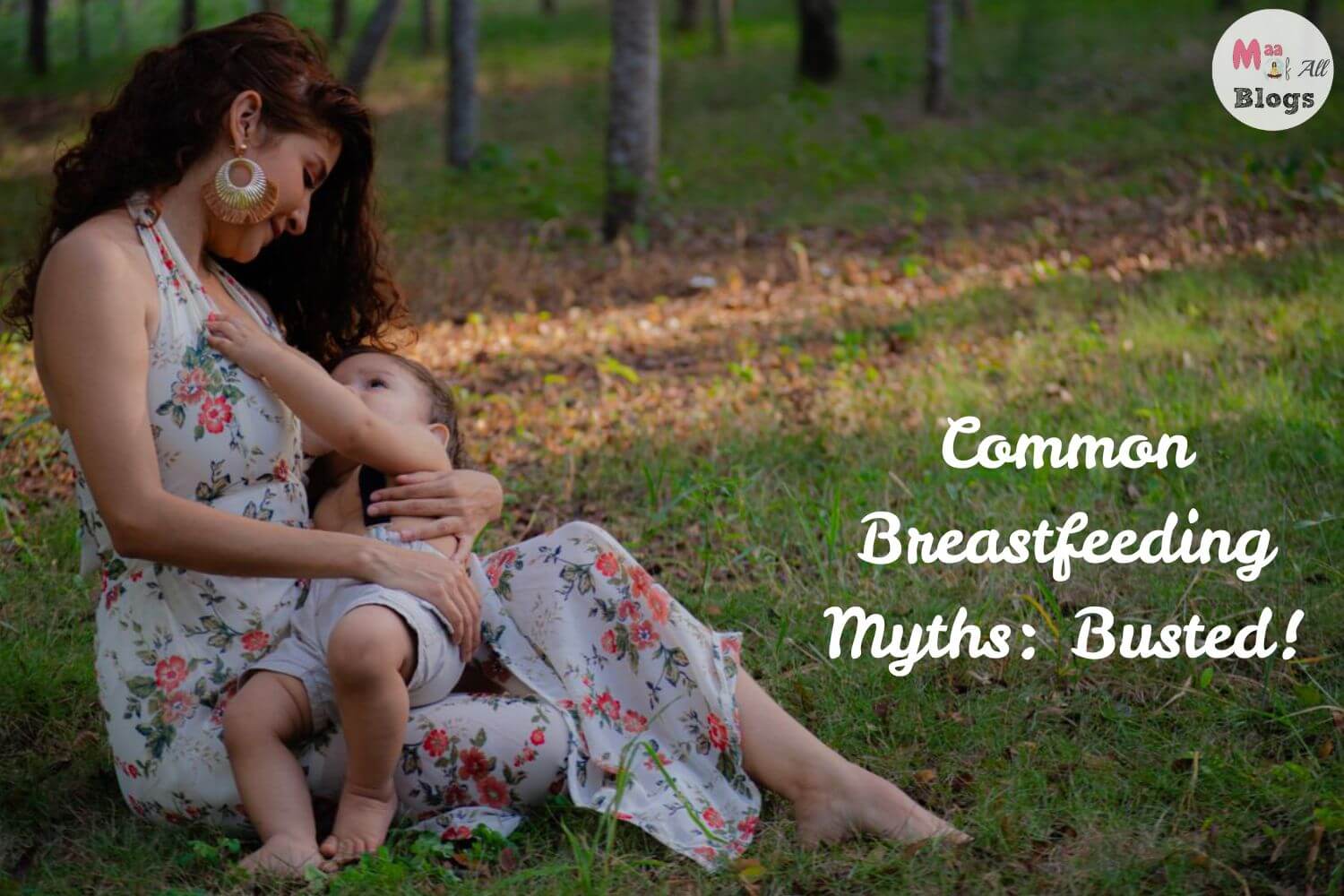
We’re sure that you’ve heard at least a few of these breastfeeding myths before, and even believed some of them! Well, we all have, and that’s why proper education is important. The more science-backed information new Moms have, the more confident they’ll feel in their breastfeeding journey. They’ll feel more empowered to discard outdated advice or old wives’ tales, and make their own decisions for their families!

References:
 Prerna is the founder, editor and owner of ‘Maa of All Blogs’, one of India’s Top Parenting Blogs. Besides being a certified Ashtanga Yoga instructor, she is also a fashion designer and an economics graduate.
When she’s not busy running her home and business, she ensures she stays active – whether it’s running a half-marathon, completing the Oxfam walk or climbing to the Everest base camp. Prerna enjoys wearing all her hats, and she does so in style!


Leave a Reply