Raksha Bandhan is India’s unique festival that celebrates sibling bonds – here’s everything you need to know about the festival’s culture and origin.
If you’ve ever lived in India, you know that we take our festivals seriously. Whether it’s splashing color on each other for Holi, or lighting lots of lamps for Diwali, we go all the way!
It’s interesting to note that despite so many festivals in India, we don’t have a Mother’s Day or a Father’s Day. Instead, we have something else – Sister’s Day, also called Raksha Bandhan!
This is one of the most important Indian festivals celebrated in the second half of the Gregorian calendar. If you’re wondering what it’s all about, here’s the complete guide!
The Ultimate Guide to Raksha Bandhan
What does Raksha Bandhan mean?
Raksha Bandhan is a traditional Hindu festival dedicated to brothers and sisters, that is celebrated every year. It is mainly celebrated in India, as well as by Hindus in Nepal, Pakistan, Fiji and Mauritius.
Raksha Bandhan is made up of two Sanskrit terms, ‘Raksha’ and ‘Bandhan’, which mean protection and bond, respectively. Hence, the festival is a symbol of ‘the bond of protection’ offered between siblings.
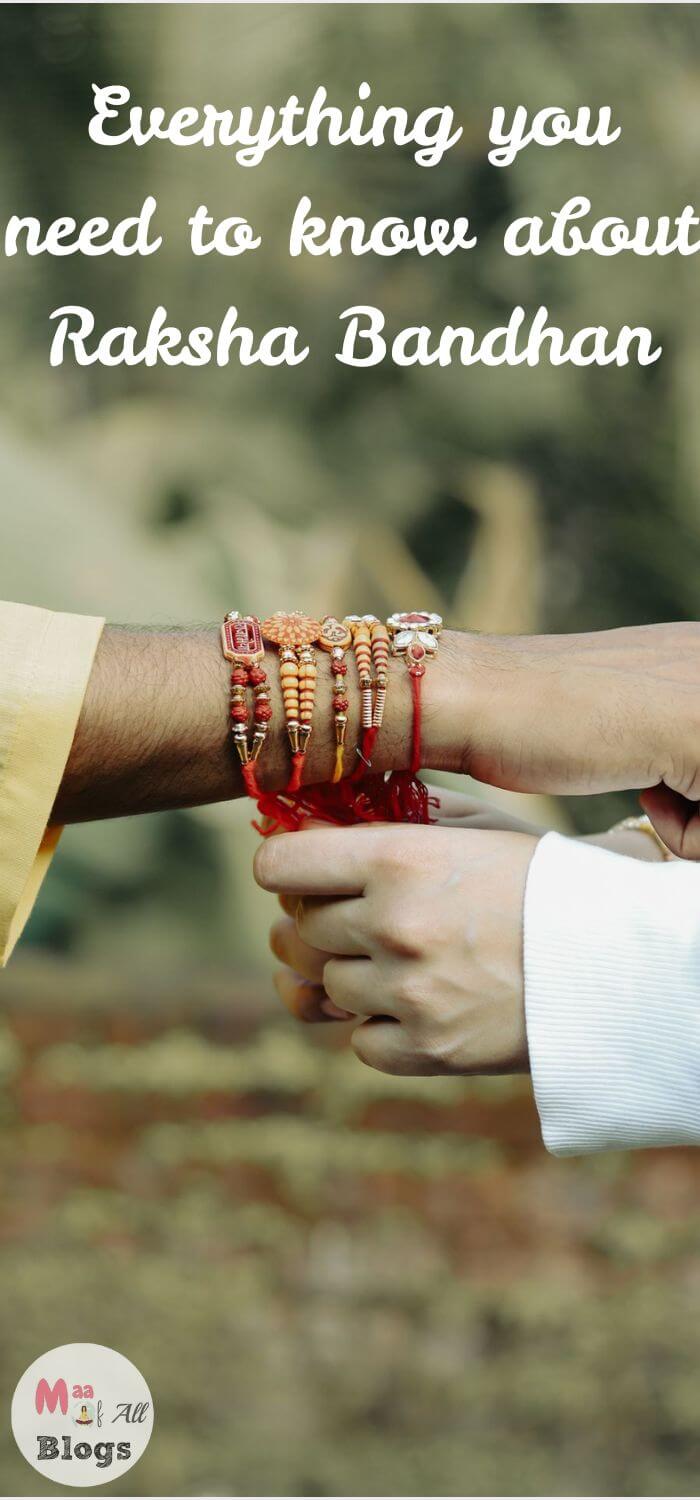
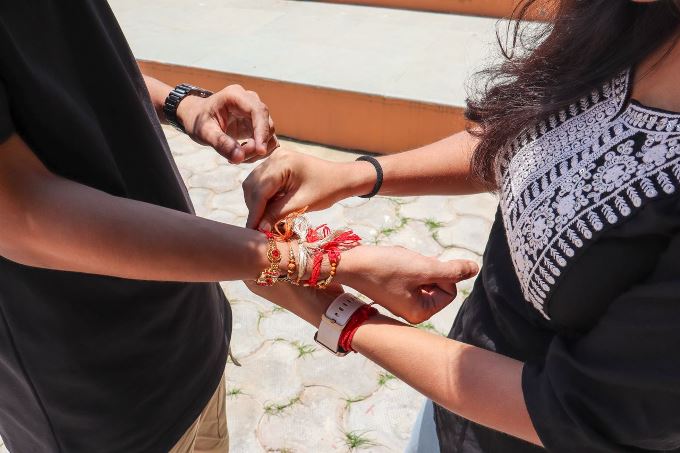
The highlight of Raksha Bandhan is the tying of the rakhi. The Rakhi is an amulet that sisters traditionally tie around their brothers’ wrists, as a symbol of renewing their bond.
Raksha Bandhan is observed on the Purnima or full moon day of Shravana, the fifth month of the Hindu lunar calendar, which usually falls somewhere between July and August.
What is the origin of Raksha Bandhan?
The main ritual of Raksha Bandhan, the Rakhi, is mentioned in the Hindu text called the Bhavishya Purana. Here, the Hindu god Krishna explains the ritual of the royal priest tying a raksha on the right wrist on the full moon day of Shravana.
Besides this, the most popular story associated with the origin of the Rakhi-tying ritual is from the Mahabharata, the grand Indian epic. Here again, the story features Lord Krishna, who cuts his finger accidentally. Immediately, Draupadi, the Pandava wife, tore a piece of fabric from her clothes and tied it around his wound to stop it from bleeding.

Lord Krishna was so moved by the gesture that he vowed to forever protect Draupadi whenever she needed it. He fulfilled his promise too: when Draupadi was being humiliated by the Kauravas, it was Lord Krishna who stepped in to save her honor.
Since then, sisters have been tying amulets or Rakhis around their brothers’ wrists, while their brothers promise lifelong protection from all kinds of evil.
Raksha Bandhan has always been a major festival, especially in rural areas, where women are often married off to another village. On this special day, sisters come back to their natal homes to celebrate with their brothers, which is considered one of the few occasions when married women are allowed to return to their parents’ home.
However, things have changed a lot, and these days it’s not just sisters tying Rakhis on brothers; siblings of all genders participate enthusiastically. The celebration isn’t restricted to direct siblings either; cousins also tie Rakhis for each other. Over time, this has become a festival that transcends all barriers of caste, religion and class.
Raksha Bandhan Celebrations across India
Raksha Bandhan is mainly celebrated across the North and West of India, as well as some parts of the rest of India. While the basic ritual of tying the Rakhi is common all over India, there are some regional variations too.
Punjab: Here, Raksha Bandhan is also known as Rakhri, Rakhardi or Raksha Purnima. Here, the festival is not only about a bond between individuals, but also about groups of people protecting and helping each other.
Odisha: Here, Raksha Bandhan is also called Rakhi Purnima or Gamha Purnima, which refers to the celebration of the birth of Lord Balabhadra, the god of farming. Due to this, you can see farmers tying Rakhis on cattle too.
West Bengal: Here, Raksha Bandhan is also called Jhulan Purnima, and people offer prayers to Lord Krishna and Draupadi.
Maharashtra: The Koli community celebrates Raksha Bandhan along with Narali Poornima, a coconut festival. Since they’re a fishing community, they also pray to Varuna, the god of the sea, and offer coconuts.
Gujarat: Raksha Bandhan coincides with the festival of ‘Pavitrona’, where women worship Lord Shiva and make offerings to the shivlings at temples.
Rajasthan: Here, Rakhis are not tied only for brothers, but for sisters-in-law too, in a tradition known as lumba.
How is Raksha Bandhan celebrated?
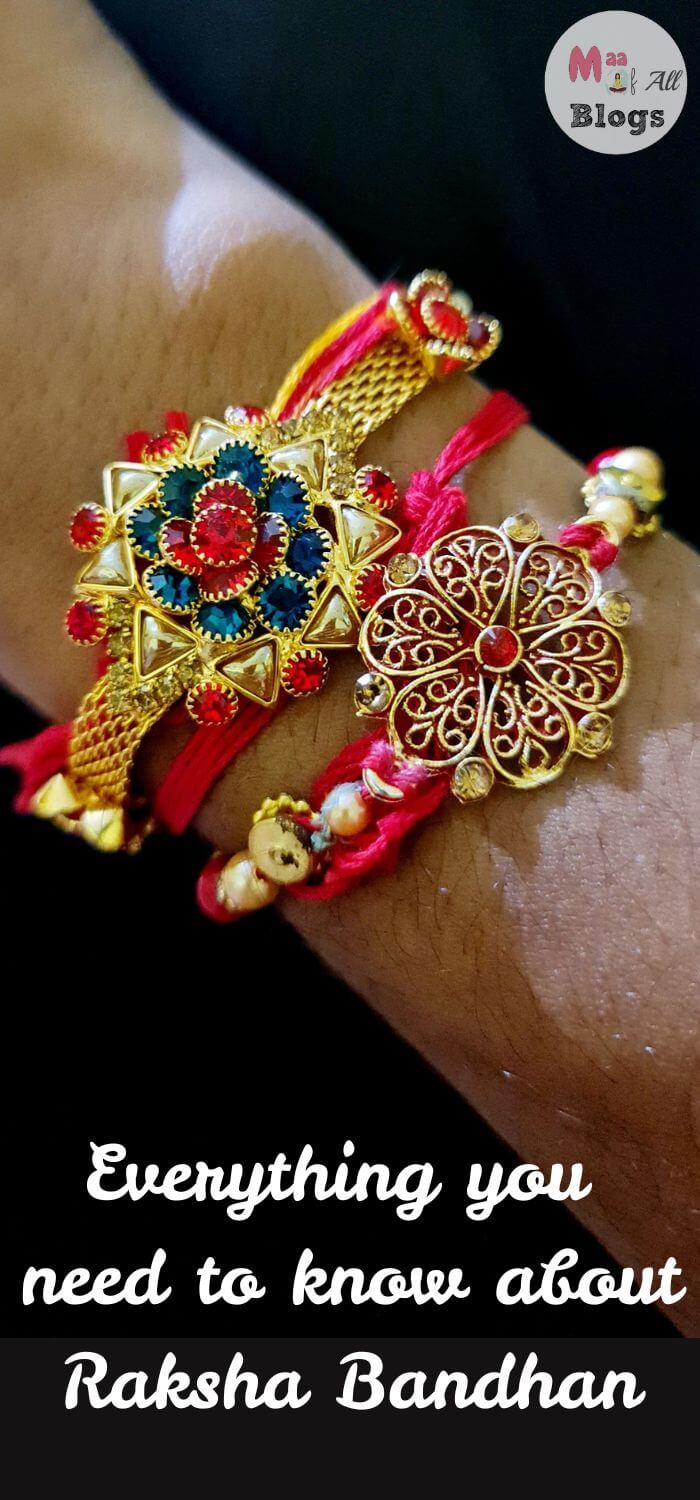
Raksha Bandhan celebrations center around the Rakhi, and because of this, in the weeks leading up to the festival, stores and markets overflow with colorful Rakhis in all shapes and sizes. You’ll find Rakhis made with various materials, from simple twine to silver and gold.
These days, Rakhis are seen more as fashion accessories for men, and designers have been coming up with some innovative and unique styles. Many people even make their own DIY Rakhis so they have something custom.
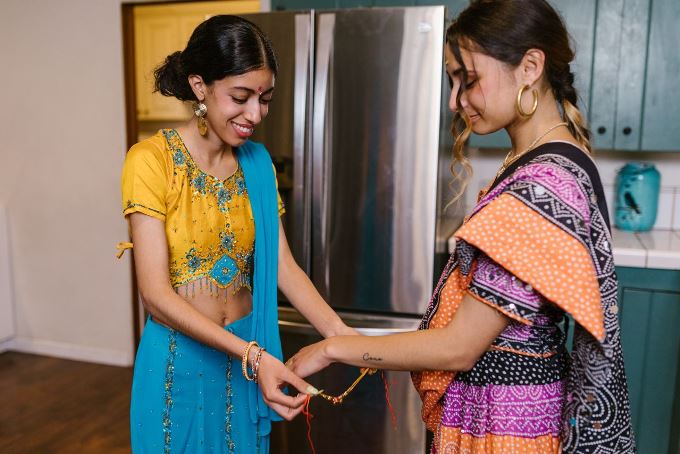
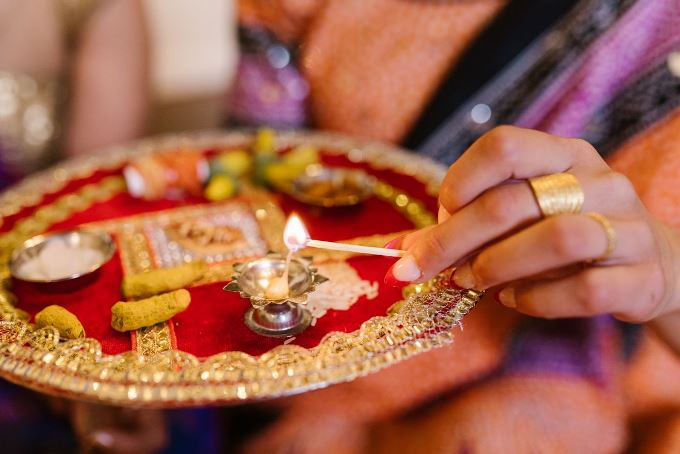
On the morning of Raksha Bandhan, people dress up in new traditional clothes. Trays called thaalis are prepared carefully, with the Rakhi, vermilion, unbroken rice grains, sweets, a diya, and incense sticks.
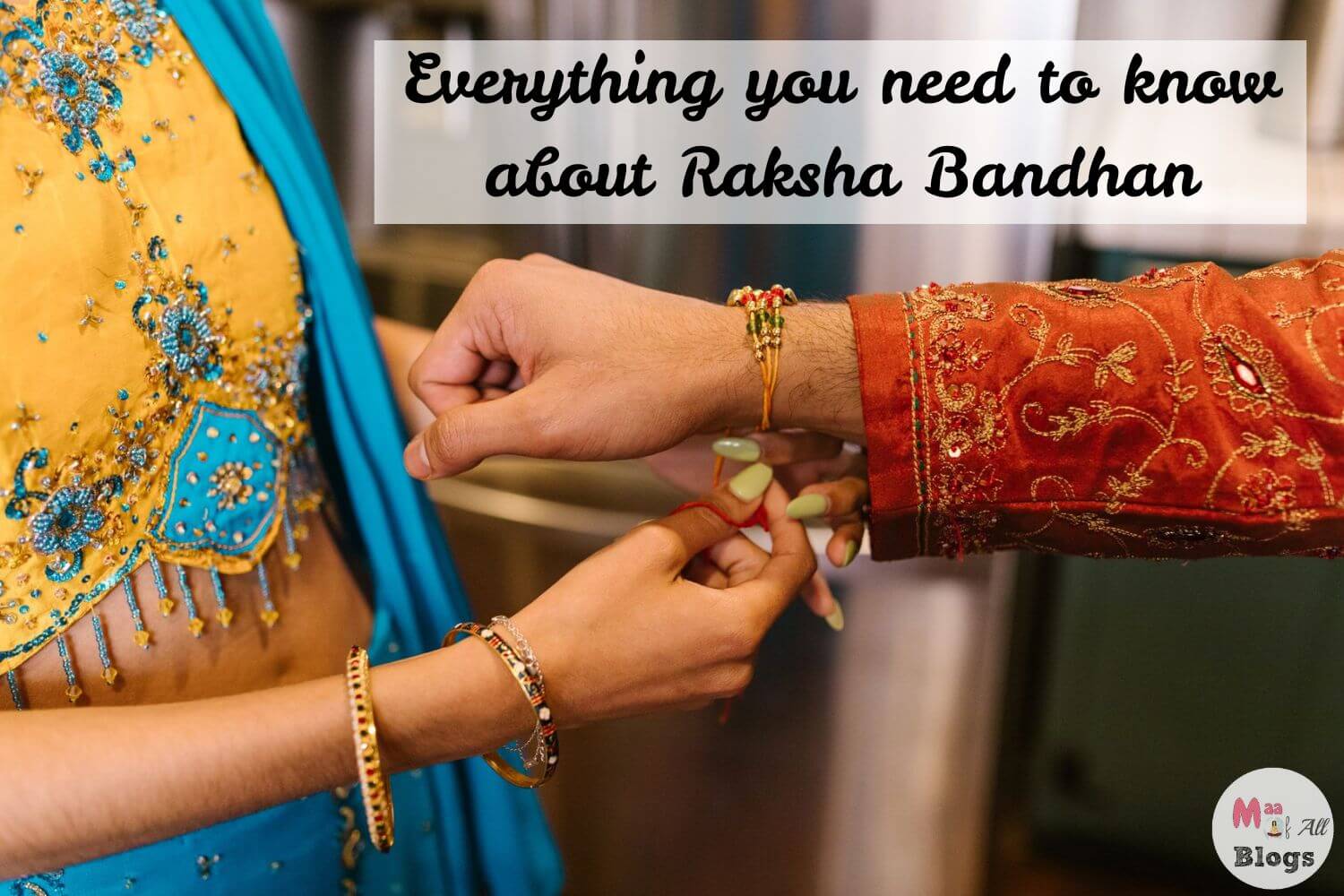
In the presence of all family members, sisters perform an aarti with the prepared tray and apply a tilak mark on their brothers’ foreheads. They then put aside the tray and tie the Rakhi on the brothers’ wrists. This is followed by both siblings feeding each other sweets.
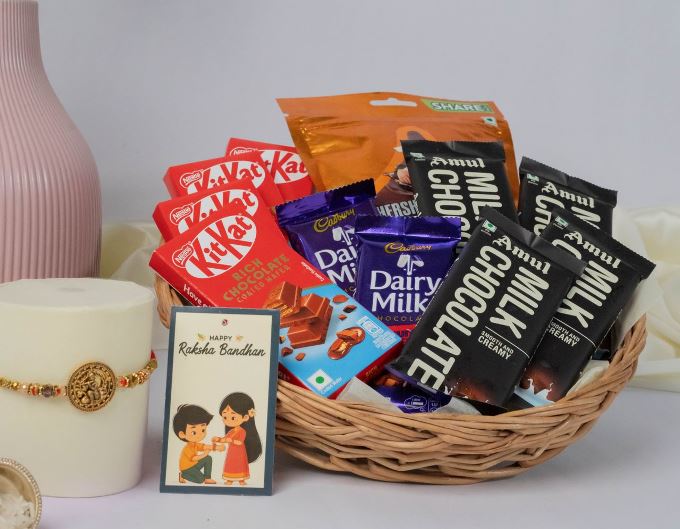
After the Rakhi tying is done, brothers give their sisters gifts – this can be something small or something expensive. The whole family then enjoys special festive delicacies like puri, samosas, kachoris, laddus or kheer.
People also use this occasion to visit their extended family members, taking along some sweets or gifts, especially if there will be some Rakhi-tying involved.
The Rakhi is usually left on for eight days and then removed, unless it wears off on its own before that. Some people recommend keeping the Rakhi tied till the festival of Krishna Janmashtami.
At the end of the day, it doesn’t matter how long you keep the Rakhi tied on your wrist, or how expensive the gift is – it is the thought that counts! If you’d like to learn more about the festival, check out this book: Amma Tell Me About Raksha Bandhan! You can also think about trying some cute Raksha Bandhan traditions this year.
While traditional notions of the man protecting women may not be as common today, Raksha Bandhan is still a reminder that no matter what happens, we’re always ready to be at our sibling’s side. Whether they need protection or simply want to talk, they can always seek us out, no matter where we are!
 Prerna is the founder, editor and owner of ‘Maa of All Blogs’, one of India’s Top Parenting Blogs. Besides being a certified Ashtanga Yoga instructor, she is also a fashion designer and an economics graduate.
When she’s not busy running her home and business, she ensures she stays active – whether it’s running a half-marathon, completing the Oxfam walk or climbing to the Everest base camp. Prerna enjoys wearing all her hats, and she does so in style!



Leave a Reply