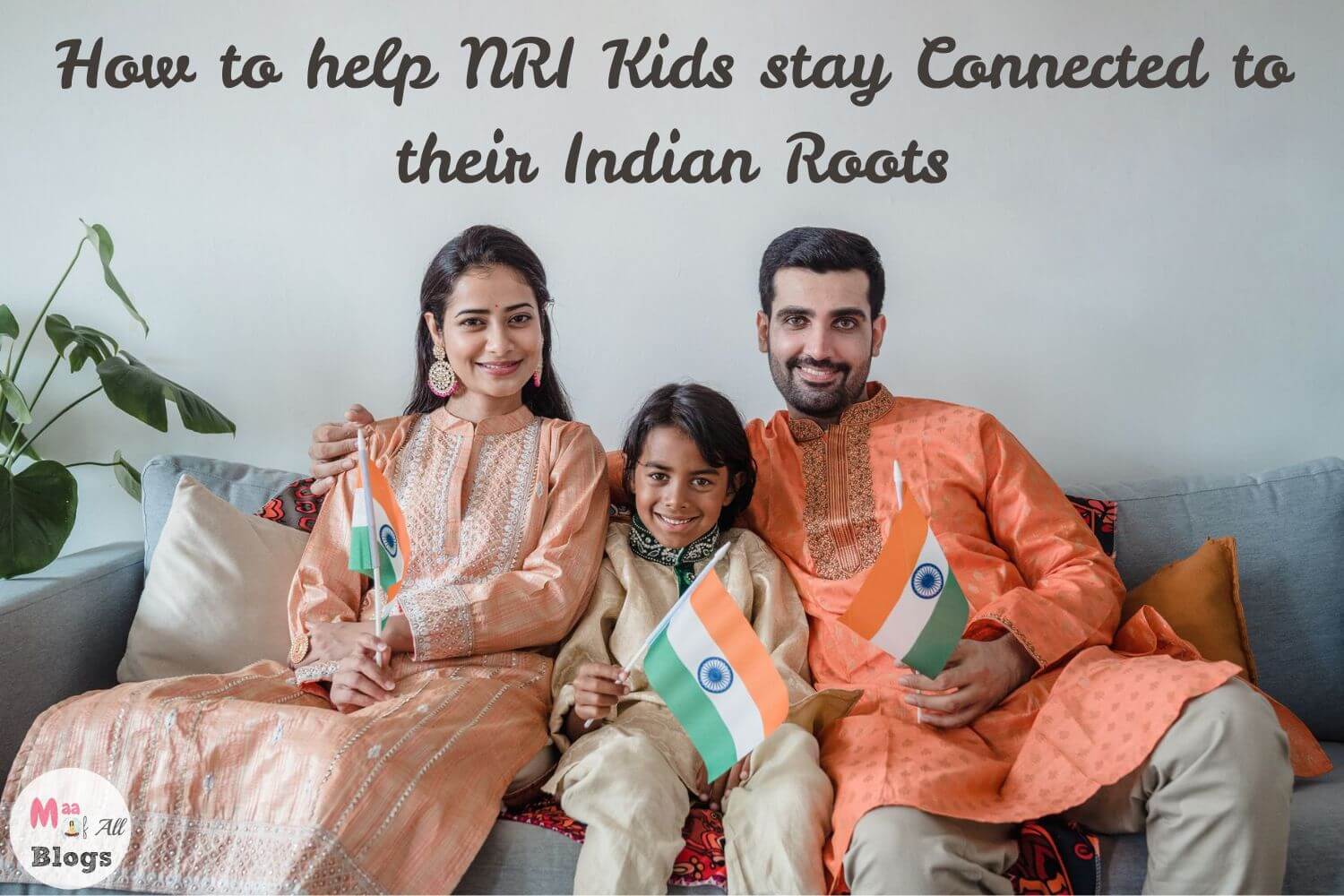
It may seem hard to connect your NRI kids and Indian culture, but it doesn’t have to be! Here are some easy tips for parents to try with their kids.
If you’re an Indian family who lives abroad and are raising kids in a culture that’s completely different to the one you grew up in, you may be worried about whether your kids will be disconnected from their Indian heritage.
It’s not an unwarranted worry – it can be hard for them to feel connected to their ‘Indianness’ when they’re surrounded by friends and people who are from other world cultures. While that’s not a bad thing, you may want them to still retain a bond with their heritage. And that’s okay too!
The thing is, Indian culture isn’t a singular thing that can be injected into a person overnight. It is a process of imbibing traditional values through living them. If you’re wondering where to get started, here are a few tips!
NRI Kids and Indian Culture – 8 Ways to Keep Them Connected

1. Festivals

We’re starting this list of connecting NRI kids and Indian culture with the most obvious one – festivals! This is one of the easiest ways to keep NRI kids connected to their roots, and most Indian families abroad are already going the usual route with the clothes and decorations. However, that’s not Indian culture, or at least not just that.
Help your kids connect with the actual spirit of the festival, and not the surface-level attributes. For example, why do you light lamps on Diwali? What is the significance of the bonfire during Holi? When kids learn the meaning of these rituals, they’ll be able to connect more deeply with their culture.
2. Food

Following on the heels of festivals, we come to another fun and easy way for NRI kids to stay connected to their culture – food! Go beyond the usual restaurant fare, and get kids involved in the entire process of making an Indian meal – from buying groceries, to measuring ingredients and to actually cooking each dish.
As you go through the process, tell them little tidbits about what they’re doing – for instance, turmeric has many health benefits, along with adding a lovely color to the curry. Talk about how the various flavors come together in different ways, and how dishes from each region of India differ. Indian cuisine is such a large and wonderful area, there’s so much to learn!
3. Language

When it comes to NRI kids and Indian culture, one thing most parents struggle with is getting their kids to speak their mother tongue. Some parents hire special tutors for the purpose, but it often ends up in half-hearted attempts and eventually leaving it all by the wayside.
Instead, make sure your mother tongue is a living language in your home, i.e., at least the adults speak the language, listen to songs in the language and so on. Kids will pick up on these little cues subconsciously, so that even if they appear to exertenally reject learning it, they will still absorb it, and maybe one day, they’ll grow to love it. If you’re a bilingual household, don’t worry – you can speak both languages without worrying that it’ll overwhelm your kids.
4. Movies

When you think of Indian movies, Bollywood is probably the first thing that comes to mind, but that’s only part of the picture! India is such a diverse country that there are many different movie industries, each one with their own individual beauty and charm. Set aside one day a week or even a month as Indian Movie Day, and let one member of your family pick a movie for the day.
If you’re worried about whether the movies are age-appropriate for your child, you can check the rating on the movie and read the synopsis to know more. Many regional Indian languages have some lovely movies for kids, and they’ll be a welcome change from the regular Hollywood movies your kids are used to!
5. Books

Besides movies, books are a great way to create a bridge between NRI kids and Indian culture. This is particularly helpful if you live in a community with very few Indians around, and the only books your kids are exposed to reflect the culture of the place you live in. If you’re looking for kids’ books that are a good introduction to Indian culture, here are a few suggestions:
- India on a Plate! by Archana Sreenivasan
- I’ll Go and Come Back by Rajani LaRocca
- My Incredible India by Jasbinder Bilan
- Seasons of Splendour by Madhur Jaffrey
- My Little Book of Festivals Boxset by Ashwitha Jayakumar and Swarnavo Swarnavo Datta
6. Yoga

This is probably our favorite way to connect NRI kids and Indian culture! With yoga, not only is your child getting connected to the practice of their ancestors; they’re also learning valuable ways to stay healthy! Yoga for kids is something that can be started from a young age, even toddlerhood.
As kids grow older, you can explore the history of yoga together, watching documentaries, reading books and experimenting with different kinds of yoga. They’ll learn mind-body connection, relaxation techniques and meditation – all while staying nimble and strong!
7. Art

India is home to hundreds of different art forms, whether it is music, dance, or folk arts. Expose your child to different kinds from a young age, and encourage them to pick one they’d like to learn. It may be Carnatic music, or Kathak, or playing the Sitar. There are plenty of online classes these days, and you may even find an offline one in your area.
The key here, is to ensure enjoyment before perfection. Kids should learn the art form because they like how it feels to them; not because they’re under pressure from you. When they learn something that interests them, they’re more likely to stick to it.
8. Travel

Most Indian families who live abroad visit India once a year, or less frequently. These visits are usually to grandparents’ places, but we recommend taking a few days to explore other parts of India. India is huge, beautiful and gorgeously diverse, that no matter what your interests are, you’ll find a place you can enjoy!
If you only have a short trip, visit places near your own, but if you can spare the time, go a little further out and introduce kids to something they’ve never seen before. Beach getaways, hill stations and yoga retreats are all great ideas for families!
At the end of the day, you have to accept that your child will probably never be as ‘Indian’ as you, since you grew up in a different time, in a different place. If you try to force your Indianness on your child, it’ll make things worse, so avoid that.
Keep trying out these simple steps at home, and keep the conversation open about India, and your childhood there. They’ll enjoy hearing about real-life Indian stories rather than India as an abstract. With time, you’ll notice that they grow fond of a country they weren’t raised in, and it’ll warm your little Indian heart!

 Prerna is the founder, editor and owner of ‘Maa of All Blogs’, one of India’s Top Parenting Blogs. Besides being a certified Ashtanga Yoga instructor, she is also a fashion designer and an economics graduate.
When she’s not busy running her home and business, she ensures she stays active – whether it’s running a half-marathon, completing the Oxfam walk or climbing to the Everest base camp. Prerna enjoys wearing all her hats, and she does so in style!



Leave a Reply