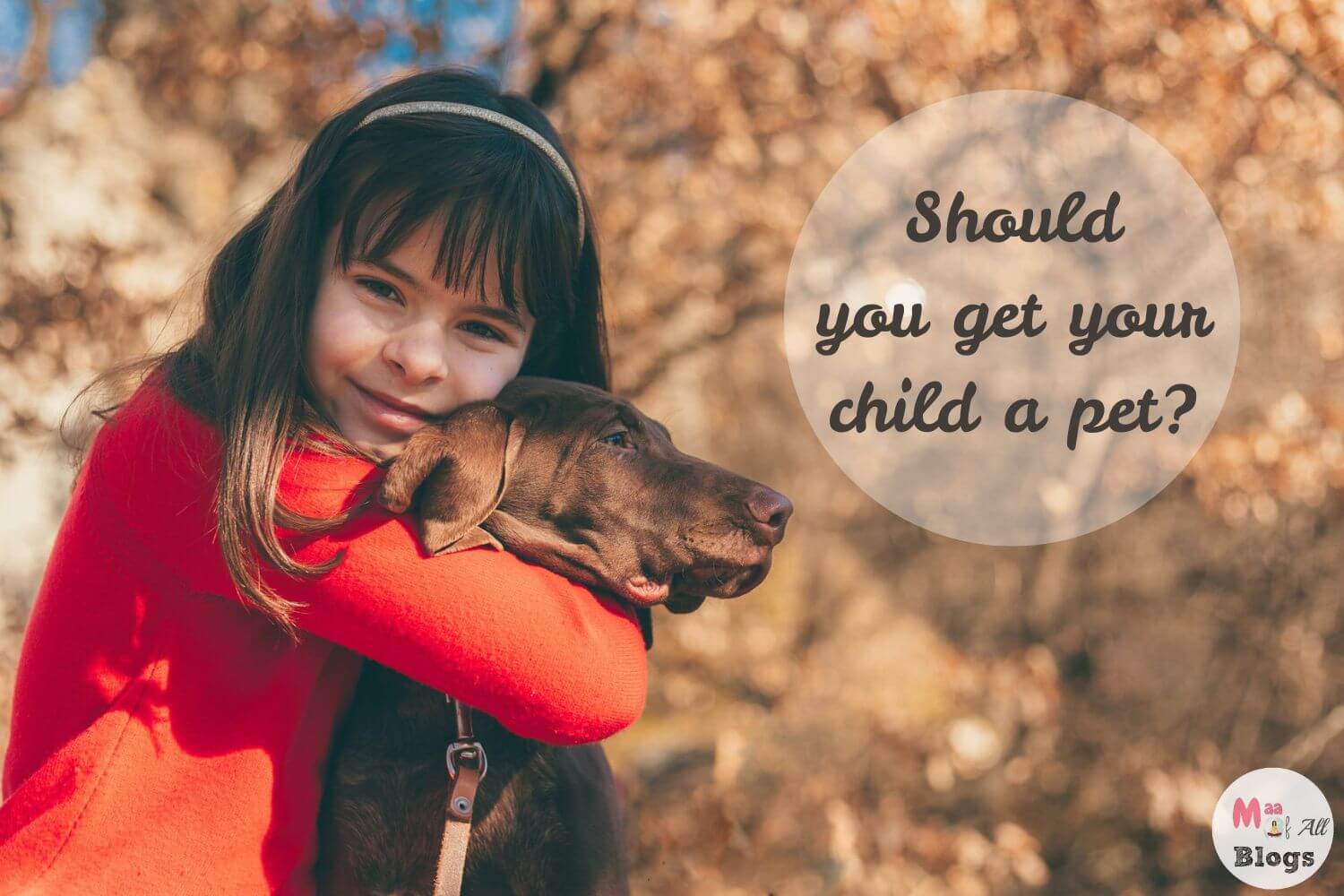
Pets and kids have endearing relationships, but is it right for your family? Here’s everything you need to know about getting your child a pet.
Every parent has asked themself this question at some point in their parenting journey – should I get my child a pet? Pets and kids look adorable together, and you’ve probably had a pet yourself growing up.
We know that this can be a difficult decision, especially if you have kids who are pestering you to bring home a cat or a dog! However, we think it’s best to deal with this question rationally, rather than emotionally, so you end up making a decision that is in the best interests of your family as well as the animal you’re planning to bring home. So whether it’s a cat, dog, bird, fish or turtle, here are some things you should know before getting your child a pet.
Pets and Kids – Should you get your child a pet?
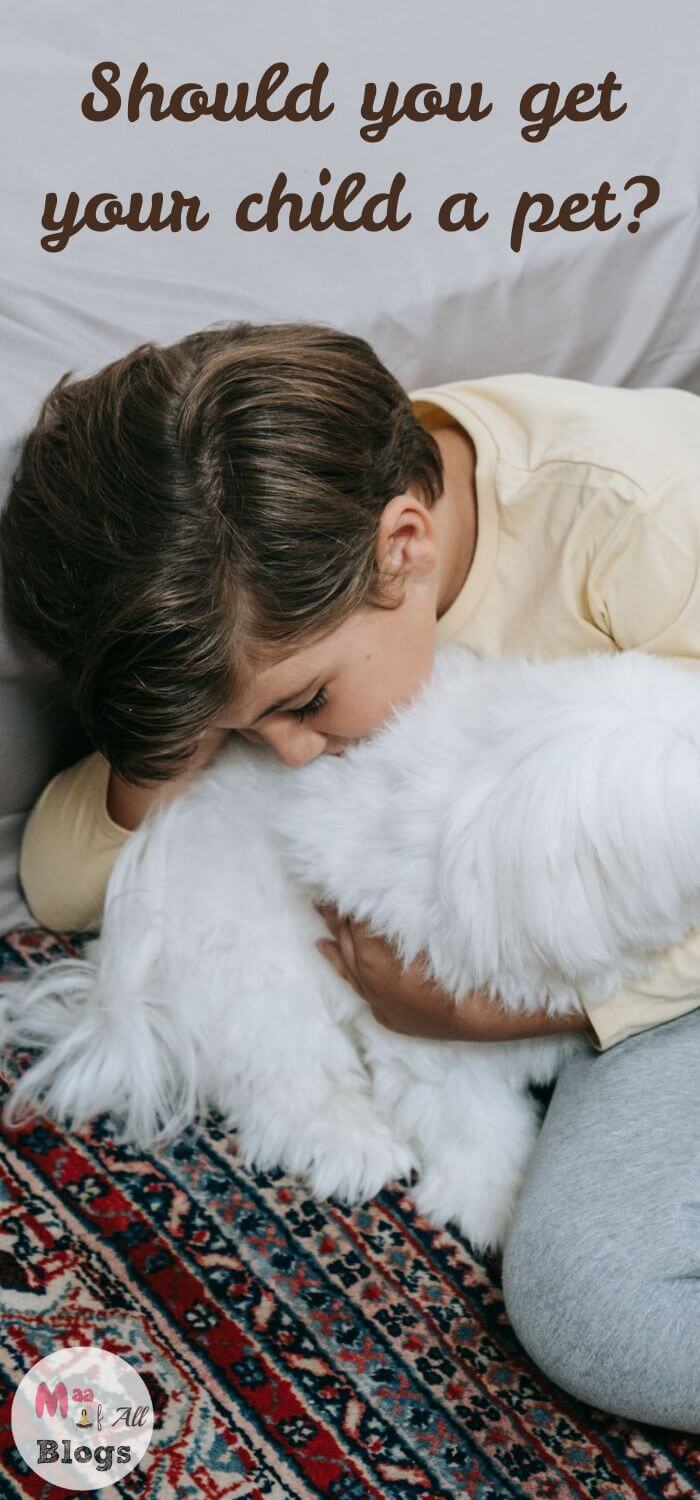
5 Reasons to Get Your Child a Pet
1. Companionship
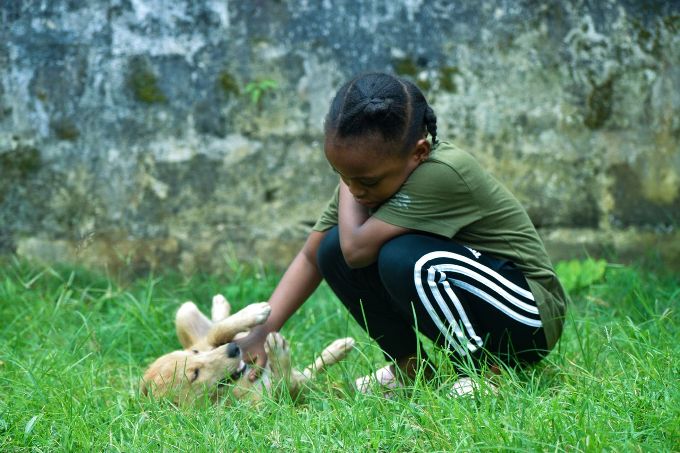
Few things can match the feeling of coming home after a bad day, and seeing a little creature greet you with the purest love known to mankind. Pets love you in the most unconditional way possible, and kids can thrive in the presence of such pure, unadulterated love. A survey of young kids found that over 40% of them turned to their pet when they felt angry, sad or uncomfortable. Many kids also said that they shared their innermost secrets with their pets.
Parents of kids with pets also say that their children appear less anxious and more emotionally stable when they spend time with their pets. In an age where there are more only children, or where kids live away from their cousins or extended families, pets help fill the gap and become a non-judgmental listener, confidant and safe space.
2. Responsibility
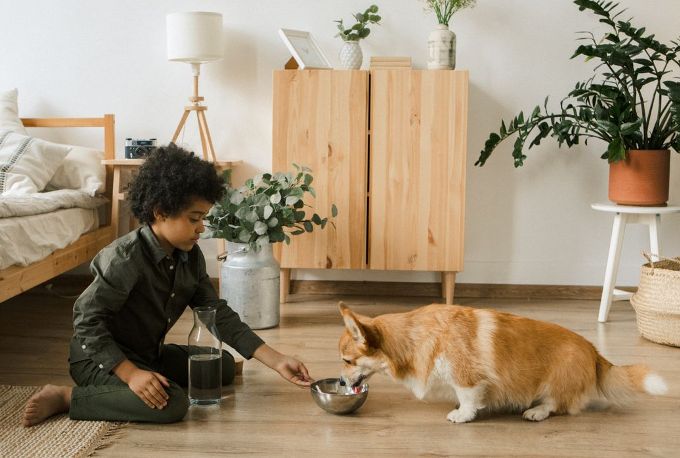
Putting pets and kids together is a great way to teach kids some responsibility. Many children who resist chores often put in extra efforts when it comes to caring for their pets, whether it is feeding them, bathing them or taking them out for walks. Kids learn what it means to care for a living thing, and all the things it takes to keep it alive and thriving.
Very young children can fill water in bowls or brush a pet’s fur. Older kids can clear litter boxes or help bathing a pet, while teenagers can take their pets on walks or to the vet. As they grow older, these tasks become part of their everyday routine, and they’ll learn to do them without having to be reminded.
3. Empathy
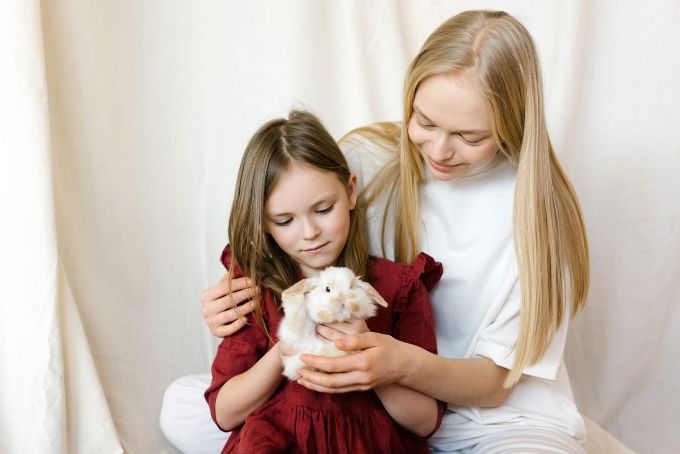
Several child experts warn that the younger generation may not be as empathetic as kids of previous generations, and yes, unrestricted internet has a role to play. One way to offset this is by bringing home a pet, which doesn’t just support emotional regulation in kids, but also promotes empathy and compassion.
When kids have a pet that depends on them, they learn to read the pet’s emotions, like when it wants to be petted, and when it wants to be left alone. It teaches kids to respect other living beings, and to respect their boundaries as well. Children who grow up caring for a pet’s physical and emotional needs are bound to be more empathetic and kind in general.
4. Better Health
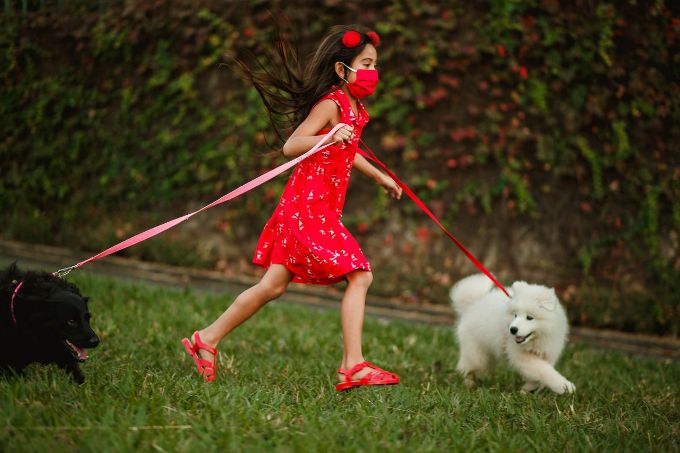
One of the most underrated benefits of companionship between pets and kids is the mutual health benefits. Some pets, like dogs, can increase physical activity, as you run around with them or take them on walks. The Children’s Leisure Activities Study (CLASS) found that owning pets like dogs is one of the top ways to help reduce childhood obesity.
Pets also encourage kids to spend more time outdoors and in the fresh air, which is good for their lungs. Studies also show that children who grow up around animals have stronger immune systems and a lower likelihood of developing asthma and allergies. Pets are also great for mental health, reducing anxiety and lowering blood pressure.
5. Life Lessons
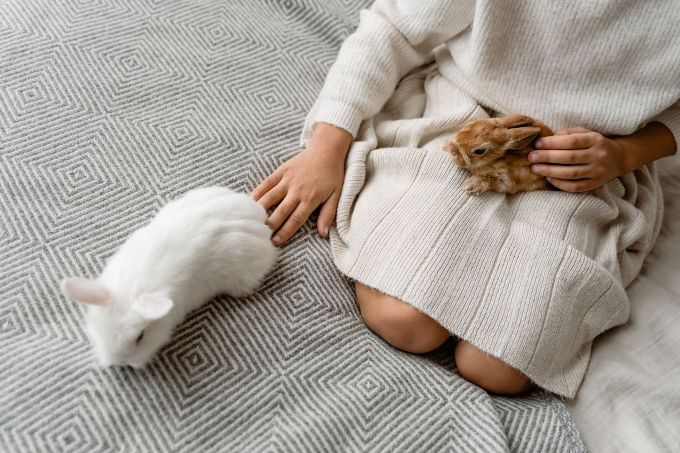
Owning a pet introduces kids to many aspects of life we generally tend to avoid talking about, like reproduction, birth and death. When a child spends time with a pet for many years, they are exposed to the entire life cycle of an animal from birth to death. Things like death and grief are difficult topics to talk about, but having a pet helps kids deal with these inevitable realities of life, and makes them more emotionally resilient.
Of course, you will have to use developmentally appropriate language when talking to kids about difficult topics, but it is important to be honest. Children will have all kinds of questions, which makes them both hurt and confused, and it’s important to handle this delicate stage with honesty and compassion.
5 Reasons a Pet May Not be Right for your Child
1. Disruptions
According to the American Academy of Child and Adolescent Psychiatry (AACAP), 62% of parents report that the biggest reason for not bringing home a pet is the disruption it can cause. Pets are noisy and can disturb kids’ routines, especially if they’re young. Many busy families may also have trouble scheduling in time to care for a pet, especially ones that require a lot of exercise and attention. Pets are also messy, and some parents feel it just adds more pressure to their already-overwhelmed lives.
2. Allergies
Pets and kids have a complicated relationship when it comes to allergies. While growing up with a pet at home can reduce the risk of allergies in some children, it can exacerbate existing allergies for others. Many children are allergic to animal urine, fur, dander or feathers, and this can be a major roadblock if you’re considering bringing home a pet.
3. Costs
Owning a pet is not cheap! Pets require the right food, grooming tools, toys as well as frequent check-ups and medications. Pet-related services, like grooming or dogwalking are also quite expensive. For many families, the added costs alone prevent them from getting their kids a pet.
4. Safety
Nearly 40% parents worry about safety when it comes to pets and kids. While you can always train a pet to behave, you still can’t rule out every single risk of attack. Kids can be bitten, and even if a pet has been vaccinated, it can be dangerous for your child. Some breeds of animals can be more aggressive than others, making them unsuitable for young kids. There’s also the risk of diseases like toxoplasmosis, which is transmitted from animals to humans.
5. Space Constraints
56% of people around the world live in cities, which means most of them have limited space for their own families, let alone a pet. Most popular pets aren’t built to live in tiny apartments, and being too cloistered can make them aggressive. If you don’t have the space to care for a pet and for it to roam around freely, it may not be a good idea for your family.
Things to remember with Pets and Kids
- Choose a pet that fits in with your lifestyle and space; for instance, if you live in a tiny home, a turtle is great, and if you travel a lot, an animal that needs a lot of attention is a bad choice
- Discuss every aspect of a pet’s care with your child before bringing it home
- Let your kids name the new pet, so they feel more connected to it
- Introduce a new pet slowly, so both pets and kids have a chance to get to know each other gradually
- Children aged 8 and above can take on responsibility for feeding and grooming their pets
- Never leave young children alone with pets
- Always oversee the pet’s care, even if your children are taking responsibility for it
- Frequently remind kids to be gentle with their pets, and tell them that pets don’t behave the same as humans
Pets and kids seem like a natural fit, but sometimes, despite all your efforts, you may realize that a pet is not the right fit for your family after bringing it home. In that case, continuing to keep the pet out of guilt only hurts you and the pet. In such situations, it is perfectly fine to look for another loving home for your pet, where it can thrive and live happily.
 Prerna is the founder, editor and owner of ‘Maa of All Blogs’, one of India’s Top Parenting Blogs. Besides being a certified Ashtanga Yoga instructor, she is also a fashion designer and an economics graduate.
When she’s not busy running her home and business, she ensures she stays active – whether it’s running a half-marathon, completing the Oxfam walk or climbing to the Everest base camp. Prerna enjoys wearing all her hats, and she does so in style!



Leave a Reply